Writing Prayers

In light of this week’s tragic van attack in Toronto, writing a personal prayer may be a helpful source of comfort, as we deal with the painful legacy left by a hateful act of violence. Now is the time to seek to a better way of being.

UUA President Peter Morales says that “prayer can be a time… when you and I open our hearts, open our awareness. Prayer can be a time when we reaffirm our concern for other people. Prayer can be a time when we connect with what we hold sacred…”

In Soul to Soul, a UU small group ministry guide, prayer is a word that encompasses many different practices, all with the same goal of quieting the mind so that we connect to ourselves or to God. Written prayers are helpful in putting our thoughts in order, allowing us to reach some insight or understanding about our hopes or our pain. As we write out a prayer or speak one aloud we may reach the wisdom that lies within each of us.

This week consider writing out your own prayer about what you need right now in your life. Be honest, be open, write from the heart.

If you are unsure what you might write about, this prayer by UU minister Christine Robinson can be a starting point. If you aren’t comfortable praying to the Divine, then write a prayer for something. Write a prayer that you can say each day, perhaps a morning prayer which sets your intentions for how you want to be during the day. Or write a prayer each night, reaching out to sacred. Once you have written a prayer, say it out loud. Give yourself some time to sit with the prayer.

Psalm 17 (adapted) by Rev. Christine Robinson

Great Mother, hear my prayer,
the love, the longing in my heart.
Hold my life, be with me in the night,
melt me down to my essence.
Help me live in love and justice. Guide me –
teach me your love.
Shield me from those who would hurt me.
Help me to leave this world a better place
And see your face in it all.
Wow!

Writer Anne Lamott suggests that there are three essential prayers:  Help Thanks Wow.  She writes “The third great prayer, Wow, is often offered with a gasp, a sharp intake of breath, when we can’t think of another way to capture the sight of shocking beauty or destruction, a sudden unbidden insight or an unexpected flash of grace. “Wow” means we are not dulled to wonder. We click into being fully present when we’re stunned into that gasp, by the sight of a birth, or images of the World Trade Centre towers falling, or the experience of being in a fjord, at dawn, for the first time.”Wow” is about having one’s mind blown by the mesmerizing or the miraculous: the veins in a leaf, birdsong, volcanos.”

Being wonderstruck as prayer is a practice of being open to the world around you. It is a moment when your own self both fades away yet also makes a connection to the greater whole. Experiencing the “wowness” of the earth is experiencing a sense of belonging to this amazing mystery of life.

This week, practice being open to the Wow of living.

This is a hard thing to explain, but it requires being present and paying attention to what is going on all around you. Notice what is around you when you are walking and working your daily round. If something catches your eye, stop, take a deep breath, and look more closely. Every moment won’t be a wow, but life may surprise you.

Listening Heart

“There is guidance for each of us, and by lowly listening, we shall hear the right word.” Ralph Waldo Emerson.

This week we will consider prayer as a way to listen deeply to our innermost voice, whether we hear that as our own voice, the wisdom of Gaia, or the voice of God. Prayer as listening is close to meditation, it is a way to centre ourselves, to clear our monkey minds of all the clutter and noise, and be present in the moment.

Listening prayer is about learning to sit and simply be.  Of course, your thoughts will go all over the place, but let them.  Repeating a short word or phrase, or focusing on your breath, can help you note your thoughts and let them go. Just notice and don’t focus on any particular thought. This isn’t easy to do, but it can be learned. UU Minister Erik Walker Wikstrom, author of Simply Pray, suggests this exercise:  set aside three minutes to send your gaze around your room without resting too long on any one thing. As you look around steadily note what you see – this is an armchair, this is a table, this is my child. Try to give equal weight to all you see, and keep your eyes moving. Listening prayer is like this, noting your thoughts, big and small, but not giving any of them too much attention.

At moments you will find that you can sit and not think and simply be. This is an on-going practice, so the experience will come and go.

Try a listening practice for a few minutes each day. Given how noisy our lives can be, find a quiet place where you can be undisturbed. Sit comfortably.  Find a word or phrase that works for you, it might be `peace` or `honour the light`, or use a focus on your breath to help clear your mind. It will take practice!

Thank you, Thank you, Thank you

This month we will explore the spiritual practice of prayer. Prayer can be tricky for Unitarian Universalists, if you don’t have an experience of God/Goddess, then to whom are you praying? We’ll look at different ways to understand prayer – as gratitude, as listening – as we try this ancient practice.

Prayer is traditionally understood as a petition to God, a request for help from a deity. If you don’t believe in a God that intervenes in the world, then what does praying to God mean? What does it mean for atheists and others who have a different sense of divinity?

For some, prayer is a way to relate to the greater whole, a way to connect to that which is beyond us. It is about being in relationship with the sacred, not whether the sacred will answer.  Poet Czeslaw Milosz in his poem On Prayer describes prayer as a bridge:

You ask me how to pray to someone who is not.
All I know is that prayer constructs a velvet bridge
And walking it we are aloft, as on a springboard,
Above landscapes the color of ripe gold…

I like this sense of prayer lifting us up. Some people who pray regularly feel a sense of lightness, of openness. We must each decide for ourselves whether prayer is a meaningful exercise, and to whom, if we wish, we might direct our prayers. There is no one answer. Many UUs who pray don’t think of their prayers as being directed towards a Being, but to the Universe, the Earth, or to all beings around them. Others use terms such as Spirit of Life to enlarge their understanding of God.

Through out this month, consider who or what you might be praying to, but try to take a few moments each day to pray. It may be the practice itself reveals the relationship. I won’t be offering written prayers to be recited, but encouraging you to take some time to think/feel/be each day, with your own words or even in silence.

Prayer as Gratitude

Gratitude as prayer is as simple as the words “thank you”.  Gratitude as a daily practice comes easily to Unitarian Universalists, it has even been argued that our theology is based on an ethic of gratitude.

For this week, our practice is to name our gratitude in prayer. Rather than writing down what we are grateful for, or posting it to facebook, take some time to sit with gratitude.

If ritual helps you move into a more spiritual mode, light a candle before beginning, and end by extinguishing the light.

Sit comfortably and close your eyes. What made you thankful today?  What should have made you thankful, but you were too busy to notice? What was difficult but ended with something positive? Sit with your gratitude until you feel you have acknowledged everything you are thankful for.

You might be directing your gratitude towards God (thank you God), or to the people or creatures or land itself (thank you first robin of spring), or you may be letting your gratitude out into the world without a particular direction (I’m grateful for sunshine). Experiment and see what feels right.

End with a final thank you, or an Amen, or So Say I, or another word or phrase that feels right to you.

Try to do this practice daily for the next week.

As the Wind Blows

“It was one of those March days when the sun shines hot and the wind blows cold: when it is summer in the light and winter in the shade.” Charles Dickens

This month our spiritual practices focus on the element of air, as we pay attention to the vital force that exists unseen all around us. This week we consider the wind. This observation practice comes from neo-pagan author and activist Starhawk’s book The Earth Path. Try this practice two or three times, at different times of the day, with different levels of wind. As you learn the various ways wind moves, you will become more aware of the earth around you.

Wind Observation

Go outside to a place where you can sit and observe undisturbed, in your backyard or in the park. Sit with your feet flat on the ground. Place your hands on your legs with your palms face up. Close your eyes and sit for a minute breathing deeply. Open your eyes.

Focus on the air and wind around you. Where is it coming from? What direction? What can you smell in the air?

Feel the air on your skin. Is it moving or still, gentle or strong? Is it cold or warm?

Listen to the sound of the wind. What is it moving through? Is it moving through trees, houses, concrete walls? It will sound differently depending on the landscape.

Stand up and move around.  Find a place where the wind moves strongly. Contrast that with a place sheltered from the wind.

Learn what the wind is telling you about the place where you are.

The Element of Fire

Flickering flames. Silence. Paper set alight. It flares brightly and then dissolves into sparks, leaving no trace.

The fire ceremony is an annual January ritual for Unitarian Universalists. Based on the neo-pagan ritual of writing on paper, then burning the paper to release the words, UUs use the light of the chalice to move towards beginning again. Some fire ceremonies focus on letting go of the regrets of the past, others focus on hopes for the time yet to come. The flame represents that spark of life, of divine light, that is present in all beings.  The power of life is embodies in fire which can create or destroy, a force of transformation that is  dangerous, intense, and beautiful.  We need fire:  the light of the sun, the heat of the furnace – we are all dependent on the energy of combustion.

In honour of our UU fire ceremony, in January our spiritual practices will focus on the element of fire.  We’ll turn our attention and awareness towards fire, grateful for its life giving energy, respecting its power.  This week, our practice is the Fire Ceremony itself.  This can be done alone or with the whole family.  While meditating on the flame of a candle, we’ll  focus on letting something go or to focus on a hope for the coming year.  What do you need to let go over to move forward?  What do you wish to bring into your life?  While UU communities hold a fire ceremony once a year, as a personal ritual it can be done more often, when you need to release a burden or when you are seeking a new approach to a relationship or activity.

Fire Ceremony

For this ceremony you need a chalice, candle, matches, paper and pen.  Flash paper  – which flares quickly and leaves no ash – can be found in magic stores, but you can use normal paper too. If you use regular paper, have a bowl beside the chalice to drop the paper into.  Be sure to have some water close by.  Decide on the focus of your attention and choose a question before  you begin.

Clear some space on a table so that nothing else is nearby.

Light the chalice with simple words such as “I light this chalice as a symbol of the light within all life.”

Sit quietly watching the flame.  Hold the question in your mind and let your thoughts flow over the question, returning to it.

When you feel you have an answer to the question, whether it is a word, a phrase, an action or image, write it down on the paper. (You may also simply hold the paper in your hand without writing).

Sit and watch the flame and when you are ready, light the paper and let it go into the bowl.

Sit for a few more moments, then extinguish the chalice, with words such as “I carry the light within me”.

With Children

The fire ceremony is simple to do with children, just be careful to keep young hands away from the flame.  You may want to practice a few times before carrying out the ritual.

Ask a question in simple terms – what are you looking forward to?  What bad thing do you want to put away?   If they haven’t mastered small print, have them whisper their answer to the paper.  Take the paper to the flame together, so you can release it quickly.

Dwell on the Beauty

“Dwell on the beauty of life. Watch the stars, and see yourself running with them.”
Marcus Aurelius, Meditations

Awe awakens us to the world. It heightens our sensitivity to the greater whole which encompasses all life. In November, our spiritual practice is lectio universum, or contemplating the universe. The universe we live in is an ever unfolding mystery, staggeringly beautiful and astonishingly large. To look at the night sky and understand that each tiny point of light is a blazing sun humbles and amazes me, I am struck by wonder every time.

This month, I will be posting videos and readings about the glory of the universe. This week’s offering is The Known Universe, from the American Museum of Natural History. Created from a four dimensional atlas of the observable universe, its perspective moves out from the Himalayas to the edge of the universe.

I suggest the following steps in watching will help shape this as a spiritual practice; please adapt to your own needs.

Watch the video in a quiet place with no distractions. Sit for a moment and breathe deeply before starting the video.

Sit and consider your response to the video. Go for a walk, wash the dishes, fold the laundry – do something with your body and let your mind sift through images and feelings.  You may also sit in silence, eyes closed, for a minute or two.

Journal your reflections, noting feelings as well as thoughts.  Or, if you watched with someone else, share your responses.

Deep like the Rivers

My soul has grown deep like the rivers. Langston Hughes.

In this final week of water practices, we will be using water as a meditation guide.

The sight and sound of water is highly evocative – the roar of a waterfall, the chatter of a creek, the soothing rush of low waves. The rich sensory offerings of water helps us to move into a meditative state, in which we can ground and center ourselves. Regular meditation refreshes our spirits, helps us meet the challenges of the day. Take ten minutes each day this week to meditate to the sights and sounds of water, the elixir of life, which sustains us all.  You can either play the video, or read the words before sitting in meditation.

Video Meditation
Play the video below, let your eyes go soft as you watch the water.  If it is easier, close your eyes and simply listen to the flowing water. It`s okay if your mind wanders; the point is not to empty your mind, but to not get caught up in your thoughts, to let them flow by you as the water flows. Gently remind yourself to come back to the water. Let your emotions – boredom, discomfort, sadness, joy – flow by as well.  Breathe in, breathe out, watch the water.  Video by Johnnie Lawson, Meditative Artist. (Warning: this video begins with ad).

Guided Meditation
The words below offer a guided meditation.  If you are using it for yourself, read a sentence out loud or silently, then close your eyes and image the scene.  To read aloud for others, invite them into a quiet time.  Ask them to settle into a comfortable sitting down or lying down position and close their eyes.  You might ask kids to wiggle their legs and arms and relax.  Wait for calm, then read the meditation out loud, pausing between sentences. Let there be silence when needed.

The Pool in the Forest
Breathe deeply, picture yourself walking along a path in a maple- pine forest. Breathe in that sharp pine scent.  Maple leaves crunch under your feet as you soak in the warm sunshine. Mushrooms poke out of the ground, moss hangs off branches. As you walk, the path begins to slope down toward a creek. You pass by limestone outcroppings, pale and solid and beautiful. You come to the creek and wander alongside, stepping from stone to stone.

Breathe deeply. You find yourself walking up to the source of the creek, a clear spring-fed pool. Dip into the water.  It is cold and refreshing. Cup your hands and take a drink. The water tastes sweet. It feels bracingly alive as it drips off your fingers. The water is so inviting, you decide to swim. As you dive in, feel the rush of energy as your body is immersed in the cool water. Every cell of your body feels completely alive. The water swirls and encircles you.

Relax into the soft embrace of the pool, let go of tension and breathe. Float quietly, supported by the gently moving water. Let your worries go like leaves floating downstream. Stay floating and drifting in the water. Let your thoughts dance along in the silence. Relax into the sunlit pool.

Breathe deeply. Feel the water in your blood and in your cells. The water within you,the water surrounding you. It is all one. One element. One whole.

Remember this as you climb out of the pool, reinvigorated. Remember this sense of belonging as you leave the pool, walking back along the stream.  Remember the wholeness as you walk back out of the pine forest and into your ordinary, extraordinary life.


Water is with us

This week, we are using water as a way to use and focus our attention on the world around us. Choosing a common event or experience as a trigger for our attention develops our ability to be present in the moment. It is a way to wake up our consciousness and sharpen our senses. This is a good spiritual practice for experiencing a sense of connection to the greater whole.

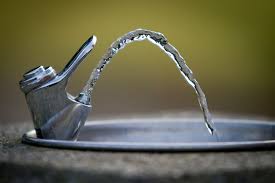
As we depend on water to nourish us, grow our food, clean our houses, and so much more, we meet water many times a day. Taking a shower, drinking from a water fountain, walking past a puddle, filling up the coffee pot are just a few examples. Using water as a trigger to awareness and presence offers an opportunity to slow down for a moment.

The directions are simple:  Pause, Notice, Open.  waterfountain

Pause:  When you use a water source, pause and breath slowly and deeply. Check in with yourself, stretch and relax. Shake out your body. Re-direct your thoughts to the present. How are you feeling? Take a few moments to sit with what ever emotion you might be experiencing.

Notice:  Come into awareness of the water. What are you using the water for? Where are you? What does the water sound like? Smell like? Taste like?  What is the temperature of the water? Thank the water for sustaining you (it may sound silly, but try it: gratitude is good for you!)

Open:  After focusing on yourself and the water, expand your attention. What else is around you? What is attracting your attention? Try to keep your eyes “soft”, don’t stare or focus too intently, let your eyes roam and gaze at what captures them. Open yourself to the environment surrounding you. Then take one more slow, deep breath and return to your activity.

Try it for a week:  Pause, Notice, Open every time you come into contact with water.

The Element of Water

Water is truly the elixir of life. Life on earth would not exist had water not come into being billions of years ago.  Our true creation story begins in the distant oceans – the source of all life arose from ancient deeps – our salty blood reminds us of our marine evolution. As Unitarian Universalists we honour this life force as an essential aspect of the interdependent web of life.

For UUs water represents the healing nature of our common life, the welcoming pool that accepts us all, as we are. Our water in-gathering ceremony reflects this symbolic understanding as we bring water from our summer experiences to blend into our water chalice on the Sunday after Labour Day.  As water is the focus of our “beginning again together” ritual, it feels right to use water as the theme to begin this year of spiritual practice.

This month we turn our awareness and attention towards water, grateful for its life creating properties. In paying attention to water, we remind ourselves of our deep connections to all life on earth.  We expand our awareness to the larger whole through the lens of water.  Water also connects us to the larger Unitarian Universalist community, reminding us of its support and care.

water chalice 2017

2017 water ceremony – our beautiful water chalice.

Water:  First Practice:  Joys and Sorrows

The sharing of joys and sorrows is, along with quiet meditation, one of the most common spiritual practices for UUs.  Most worship services include both in some form or another.  For many congregations, joys and sorrows are expressed through lighting candles.  Others use glass pebbles and water.  Spiritual Exploration groups often use a water chalice.  Each week when we gather, we take the time to place pebbles in our water chalice or light a candle, sharing the ups and downs of living.  As we drop in a stone, we know the ripples extend beyond ourselves, letting our joys increase and helping our sorrows to dissipate. This simple act reminds us that we are not alone, others have experienced the same losses and concerns, and that happiness returns in time.

This week, our spiritual practice is to simply take “joys and sorrows” into our homes as a reminder that we are part of this chalice community wherever we are.

Individual Practice

Fill a bowl with water.  Collect some pebbles, glass stones, buttons, or pennies and place beside the bowl.

Each day, take five minutes to sit with the water chalice. Take a minute to simply sit and be, looking at the water. As you look at the water, reflect on your day.  What are you struggling with?  What are you worried about?  What is hurting you? Pick up a pebble, name your struggle aloud. Release it into the water. Continue to sit looking into the water. What was the best part of your day?  Where did you find delight? Pick up a pebble, name your joy aloud.  Release it into the water.  Sit quietly as long as you need to. To end, you might wish to say “Living with joys and sorrows, I am whole and part of the whole.”

Couples or Families

For families or couples, practice this at bedtime or at the end of dinner, whenever you are all together and have a few minutes to focus. Gather the family around the water chalice. Begin with quiet, just looking at the water. Then ask each person to share something significant from their day. After everyone has spoken, or after each person speaks, you might say  “we listen in love”.  To end, you might say “Together we face our sorrows and celebrate our joys. Blessings on us all.”

Tips: If your children (or you!) have trouble settling, begin by ringing a bell or striking a chime or drum. Clear some space around the chalice so there are few visual distractions. Use words that work for you. What matters most is taking the time to sit, look at the water, and reflect on the ups and downs of the day.